Crypto product design in the AI era: How to build trust before users connect a wallet
If you are building a crypto website today, the first challenge is trust. Users approach crypto with caution, so they have to understand what the product does, what it can access, and why it deserves a place near their wallet before they connect anything.
AI makes that decision even more sensitive. Many crypto products now use it to summarize portfolio activity, detect suspicious behavior, explain risk, personalize dashboards, or suggest smarter ways to manage assets. The website has to explain two layers at once: how the crypto product works and how its intelligence works.
Before users take a high-stakes action, they want to know what happens to their data, which actions require confirmation, what AI is allowed to analyze, and where their control remains.
For crypto founders and product teams, this creates a practical design challenge: reduce uncertainty early. Make the product promise specific. Explain wallet access. Show AI data boundaries. Translate risks into human language. Give users a clear way to verify what the system says.
Drawing on our fintech and crypto product design experience, here are the website and interface decisions that help AI-driven crypto products feel clearer, safer, and easier to understand from the first screen.

1. Make the product promise specific
The first screen has to answer a simple question: what does this product help me do?
Many crypto websites still open with abstract claims about the future of finance, ownership, decentralization, or freedom. Add AI to that, and the promise often becomes even blurrier: “AI-powered Web3 platform,” “smart crypto ecosystem,” “intelligent asset management.”
These phrases sound modern, but they do not help users understand what the product actually does.
A stronger product promise explains:
- what the product is;
- who it is for;
- what crypto action it supports;
- what AI helps with;
- which assets, chains, or use cases it covers;
- which decisions remain with the user.
For example, this is vague: AI-powered crypto platform for the future of finance.
This is clearer: An AI-powered portfolio dashboard that helps users track crypto assets, spot risk signals, and understand performance across wallets and chains.
Specificity matters because users do not judge risk only through security claims. They also judge it through clarity. When the product promise is vague, the interface forces users to guess. In crypto, guessing makes the risk feel larger.
A good first screen gives users enough context to understand why the next step is worth taking.
Useful tools: Maze, Dovetail, and Useberry can help teams research user expectations, analyze feedback, and test whether the product promise is clear.

2. Explain what AI actually does
“AI-powered” is no longer enough. Users want to know where AI appears in the product and what kind of help it provides.
AI is useful when it helps users read what would otherwise feel like a wall of crypto data: portfolio changes, risk signals, suspicious activity, asset exposure, market movement, and possible next steps before a swap, bridge, stake, or rebalance.
The important part is to avoid making AI feel like magic. In a high-stakes product, AI works better as a decision-support layer. It helps users understand what is happening and compare possible actions before they commit.
A useful website block could look like this:
How AI helps users
- It summarizes portfolio changes;
- it flags unusual wallet activity;
- it explains risk signals in plain language;
- it helps compare possible actions;
- it never moves funds without your confirmation.
This type of explanation makes AI easier to trust because it gives users a clear mental model. They can see where the system helps and where their own control remains.

3. Show what data AI can and cannot access
For AI-driven crypto products, the trust question gets sharper. Users are connecting a wallet and letting an intelligent system read, interpret, and possibly store signals from their financial activity.
Make those boundaries visible before users start imagining the worst version of the flow.
Users may wonder:
- what the AI can see;
- whether wallet data is stored;
- whether transaction history is used for model training;
- whether private keys or seed phrases are exposed;
- whether third-party AI providers receive any data;
- whether personal data can be deleted or disconnected.
A strong website does not bury these answers deep inside legal text. It explains them in human language.
For example:
What AI can analyze
- connected wallet addresses;
- on-chain transaction history;
- portfolio balances;
- market data;
- risk signals;
- user-selected preferences.
What AI cannot access
- private keys;
- seed phrases;
- funds;
- personal files;
- messages outside the product;
- actions without user confirmation.
What we do not use for AI training
- private wallet data;
- personal account data;
- transaction history tied to identity;
- support conversations, unless users explicitly allow it.
The exact wording depends on the real architecture of the product. When the system uses third-party AI providers, external APIs, or server-side processing, say that clearly.
A credible explanation covers:
- what data is processed;
- where it is processed;
- what is stored;
- for how long it is stored;
- what is anonymized or aggregated;
- what is never used to train public models;
- how users can disconnect, delete, or export their data.
This is where trust becomes practical. Users do not need vague promises that everything is safe. They need to understand how the system handles sensitive information.
4. Add an AI privacy note near the first wallet-related CTA
For many crypto products, the main CTA is Connect wallet. It may be technically necessary, but emotionally it can feel like a big first step.
When AI is part of the product, the wallet CTA should not stand alone. Users should not have to click first and understand later what the system can analyze.
A short privacy note near the CTA can explain what AI reads, what it cannot access, and whether wallet data is used for training.
For example:
Before AI analyzes your wallet
- we only read public on-chain activity;
- we never access private keys or seed phrases;
- we do not use your wallet data to train public AI models;
- you can disconnect your wallet and delete saved data at any time.
When the product uses read-only wallet access, say it clearly:
Wallet connection is read-only until you choose an action that requires signing.
This kind of microcopy reduces uncertainty at the exact moment where users may hesitate. It also makes the product feel more transparent before the user gives it access to anything.
Useful tools: Privy, Dynamic, Reown AppKit, and WalletConnect Verify API can help teams support wallet connection, authentication, and safer connect-wallet flows.
5. Make the first action feel low-risk
Give users something useful to do before wallet connection.
For example:
- explore demo;
- view product tour;
- check supported networks;
- see how it works;
- read security model;
- try test mode;
- open docs.
This does not weaken conversion. It gives cautious users a path into the product before asking for a high-anxiety action.
A user who understands the product is more likely to connect a wallet with intent. The first action should match the user’s level of confidence. Some users are ready to connect. Others need orientation first.
This is especially important for AI-driven crypto products, where users may want to see how insights, risk signals, and recommendations work before they give the product wallet-level context.

6. Separate AI insight from user action
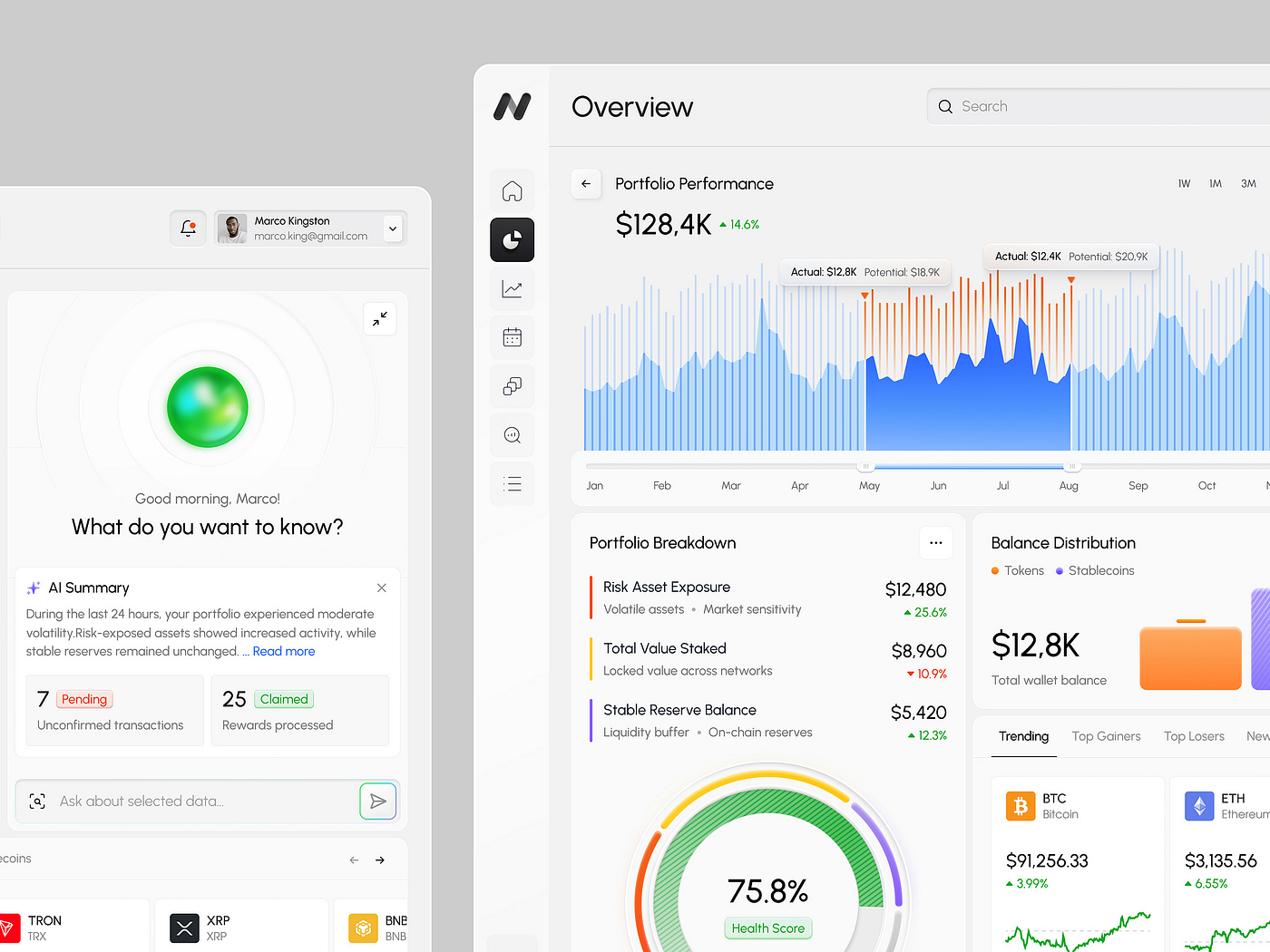
AI makes crypto products more useful when it explains, summarizes, warns, compares, or recommends. The interface has to clearly separate insight from action.
AI may help users understand:
- portfolio concentration;
- suspicious wallet activity;
- token exposure;
- liquidity risk;
- market movement;
- unusual approvals;
- possible next steps.
High-stakes actions should stay visibly user-controlled:
- connect;
- approve;
- sign;
- swap;
- bridge;
- stake;
- send;
- revoke.
A good interface can separate these layers like this:
AI insight: Your portfolio has high exposure to one token.
Suggested next step: Review diversification options.
User-controlled action: Confirm swap.
This structure helps users understand where AI supports thinking and where an irreversible or financially meaningful action begins.
7. Turn transaction previews into decision screens
When the product involves swaps, bridges, staking, minting, transfers, payments, or smart contract permissions, the transaction preview should work as a decision screen.
A decision-ready preview should clearly show:
- what the user sends;
- what the user receives;
- network;
- recipient;
- estimated fee;
- slippage;
- time estimate;
- permission requested;
- AI risk note;
- what can change;
- whether the action can be reversed;
- what happens after confirmation.
The screen should help users answer one important question: am I doing what I think I am doing?
AI can improve this moment by explaining risk before the user signs.
For example:
AI risk note: This transaction interacts with a contract you have not used before. Review the contract address and requested permission before signing.
AI risk note: The expected output may change because liquidity is low. You may receive less than shown if the market moves before confirmation.
This is a practical way to use AI for safety. It gives the user better context before the decision.
Useful tools: Tenderly Simulations, Blockaid, and Blowfish can help teams turn transaction previews into clearer decision screens with simulated outcomes, risk signals, and warnings before signing.

8. Translate technical and AI risk into human language
Crypto interfaces often use warnings that are technically accurate but hard to act on.
Instead of: Contract interaction requested
A clearer version: This action lets the app interact with your wallet for this transaction. Review the permission before signing.
Instead of: High slippage detected
A clearer version: The final amount may change more than usual because liquidity is low. Review the minimum you are willing to receive before you continue.
Instead of: Wrong network
A clearer version: Your wallet is connected to Ethereum, but this action requires Arbitrum. Switch networks to continue.
AI risk messages need the same clarity.
Instead of: AI detected unusual wallet activity
A clearer version: This wallet recently interacted with a contract linked to suspicious activity. Review the address before you continue.
Instead of: Low confidence prediction
A clearer version: This estimate is based on limited recent market data, so it may be less reliable than usual.
A good risk message explains:
- what was detected;
- why it matters;
- what the user can check;
- what happens if they continue;
- what they can do next.
A warning should help users make a better decision. It should not leave them with a technical label and a button.

9. Make security visible, including AI security
Security should be easy to find, specific, and calm. In crypto, overconfident language can make a product feel less credible.
Avoid claims like:
- military-grade security;
- 100% safe;
- unbreakable protection.
A stronger security section shows what has been checked, when, by whom, and where users can read more.
For crypto security, a good website can show:
- audit reports with dates;
- security partners;
- bug bounty;
- status page;
- contract addresses;
- permission management;
- phishing protection;
- recovery guidance;
- support and incident contact.
For AI security, the website can explain:
- data processing rules;
- model or provider disclosure at a high level;
- training-data policy;
- human review for sensitive cases;
- prompt injection protections;
- limits on AI-triggered actions;
- history of AI-generated recommendations;
- source links for AI-generated insights;
- clear limitations of AI outputs.
The tone matters. Security should feel serious, but not theatrical. AI should feel useful, but not omniscient.
Useful tools: OpenZeppelin, CertiK, and Sherlock can support smart contract audits and security reviews. Chainalysis, Elliptic, and Sumsub Crypto Monitoring can help with wallet screening, transaction monitoring, and compliance workflows.

10. Give users ways to verify AI outputs
When AI says something is risky, users should be able to understand why.
A weak AI insight sounds like this:
High risk detected
A stronger AI insight explains the reason:
This transaction requests unlimited token approval for a contract you have not used before. You can approve a smaller amount or review the contract address before continuing.
A useful AI explanation may include:
- short explanation;
- source or signal;
- confidence level, when useful;
- link to transaction or explorer;
- suggested next step;
- option to ignore, save, or investigate.
For example:
Why the transaction was flagged
- new contract interaction;
- unusual approval request;
- low liquidity;
- high concentration in one token;
- wallet linked to suspicious activity;
- large price movement;
- network mismatch.
AI should not behave like an oracle. In crypto, unexplained intelligence can create more anxiety, not less. A better approach is to make AI a layer of explanation that users can inspect.
Useful tools: Tenderly Simulations, LangSmith, Arize Phoenix, and Humanloop can help teams make AI outputs easier to verify through transaction simulations, traces, evaluations, and AI behavior checks.
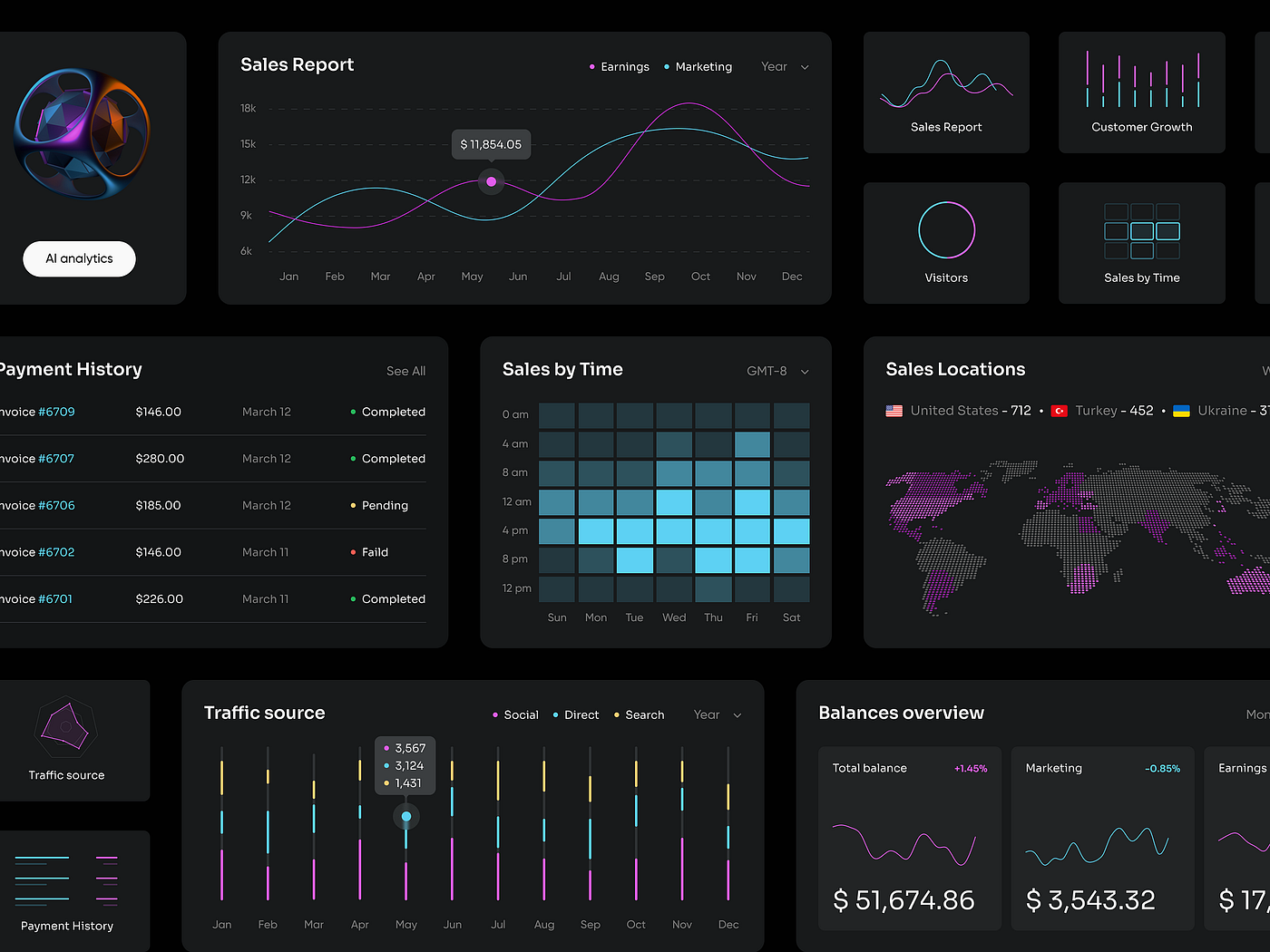
11. Use visual design to make intelligence feel calm
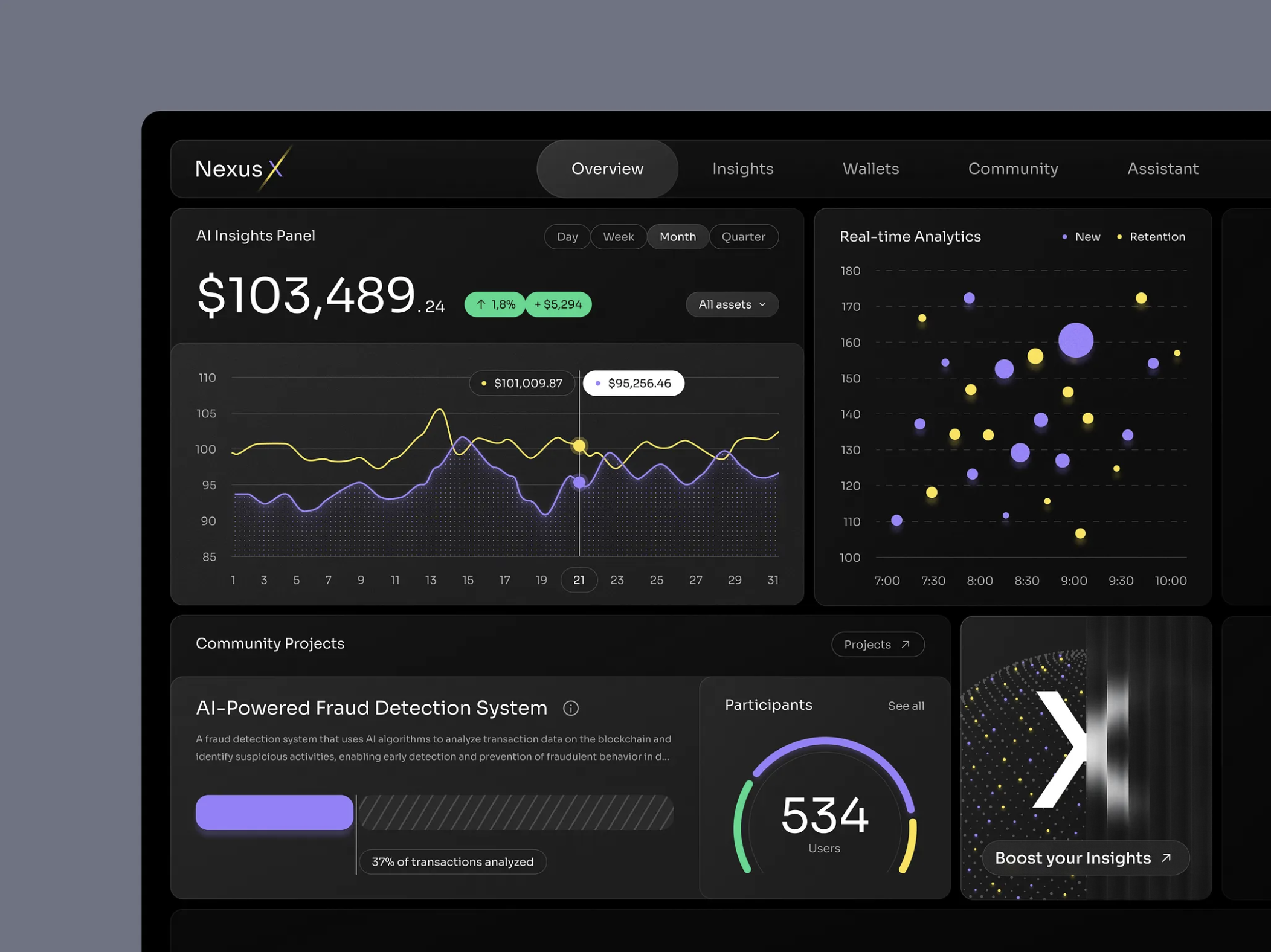
Crypto websites often lean into aggressive visual language: neon gradients, dark backgrounds, 3D coins, dense charts, tiny labels, animated tokens, and futuristic noise.
AI adds another common trap: sparkle icons, glowing assistants, vague magic metaphors, overanimated insights, and recommendations that sound too confident.
That kind of visual language can create energy. It can also make the product feel closer to a casino than a financial tool.
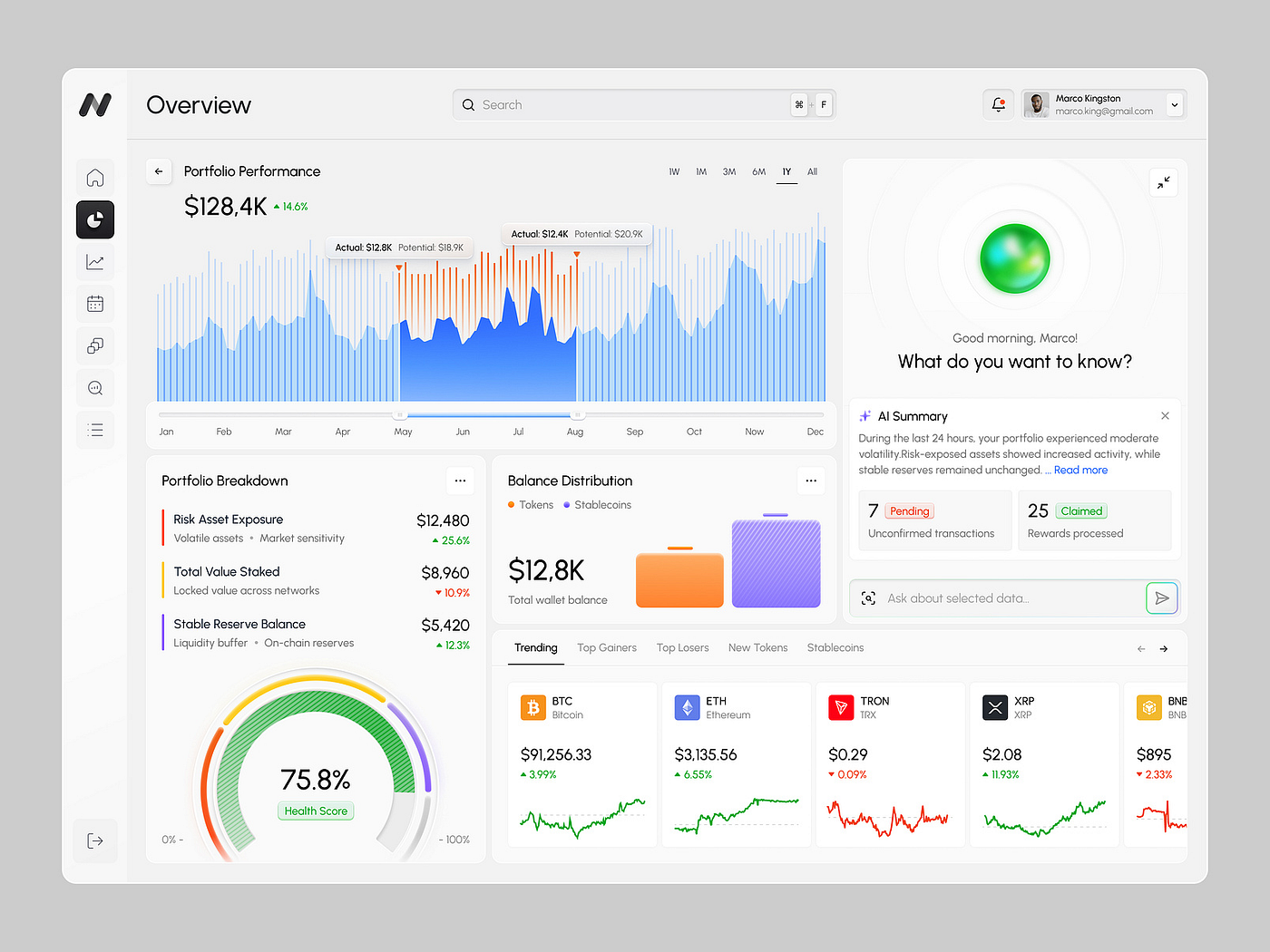
The same applies to dark and light modes. Dark interfaces are common in crypto, but they are not automatically the best choice for every audience. For some users, a light interface can feel clearer, cleaner, and more trustworthy, especially when the product deals with financial decisions, risk signals, and AI-generated explanations. Study your audience before choosing the visual direction. The right interface should match the level of confidence, focus, and seriousness users expect from the product. When both modes make sense, give users a clear way to switch between them.
A safer visual direction usually needs:
- clear typography;
- enough space;
- readable contrast;
- simple product screens;
- structured cards;
- calm motion;
- clear status colors;
- strong hierarchy;
- fewer decorative elements around risky actions.
For AI-driven crypto dashboards, useful patterns include:
- AI summaries with source or context;
- risk levels with explanation;
- readable tables;
- scenario comparison;
- visible uncertainty;
- separate blocks for insight, warning, and action;
- calm visual treatment around approvals and transactions.
AI in crypto design should feel like an analyst beside the user, not like a magician behind the curtain.
Useful tools: Maze, Dovetail, and Useberry can help teams test whether dark mode, light mode, dense dashboards, or calmer layouts create more confidence for their specific audience.

12. Show the full path before the first high-stakes action
Users feel safer when they know what sequence they are entering.
For an AI-driven crypto product, the website can show a simple flow:
- connect wallet;
- AI analyzes visible wallet activity;
- review portfolio insights;
- check risk signals;
- review permissions;
- confirm action;
- track status;
- manage or revoke permissions later.
This is especially useful for products with complex flows:
- staking;
- bridges;
- DeFi dashboards;
- institutional custody;
- token management;
- analytics;
- AI portfolio assistants;
- risk monitoring platforms.
A visible path gives users a mental model. It turns an unknown process into a sequence of understandable steps. It also shows where AI appears in the flow and what kind of influence it has.
13. Give users ways to verify the product
Trust signals are stronger when users can check them.
A good crypto website should make verification easy:
- docs;
- audit reports;
- contract addresses;
- explorer links;
- legal information;
- terms;
- status page;
- support;
- community links;
- security contact.
For an AI-driven crypto product, users may also need:
- AI data policy;
- privacy policy written in human language;
- model limitations;
- data retention rules;
- training policy;
- security architecture overview;
- explanation of human review or escalation;
- opt-out controls, when the product allows them.
This does not mean overwhelming the homepage with links. It means giving serious users a clear way to go deeper.
For crypto products, verification is part of the user experience. For AI-driven crypto products, it becomes even more important because users need to understand the financial layer and the intelligence layer at the same time.

Closing
Make AI understandable before asking users to trust it.
Explain what AI analyzes, which risks it flags, how recommendations can be checked, and where every final decision stays with the user. Show wallet access, data boundaries, security signals, and transaction logic before the first high-stakes action. Make the product’s intelligence visible, limited, and easy to verify.
Do this, and users get a clearer reason to continue. They understand what happens next, what the system can and cannot do, and where their own control remains. The product feels more mature, more transparent, and less risky to explore.
For crypto founders and product teams, this is where design becomes a growth tool. Clear positioning, transparent AI logic, human-readable risk messages, calm visual design, and verifiable product details can turn a complex crypto website into an experience that feels safer, smarter, and more controlled from the first screen.